Check Dams, Forest Rights & Tribal Livelihoods: Why 2025 Is a Turning Point for Tribal Communities in India
In recent weeks, India has seen a surge of conversations around water conservation, forest rights, and tribal livelihoods. From the Himachal Pradesh High Court directing the state to create a policy on check dams in the Shivalik hills, to debates between ministries over the Forest Rights Act (FRA) 2006, to new policies incentivizing tribal entrepreneurs in Gujarat—these stories highlight one truth: the future of India’s forests, water, and climate is deeply tied to the future of its tribal communities.
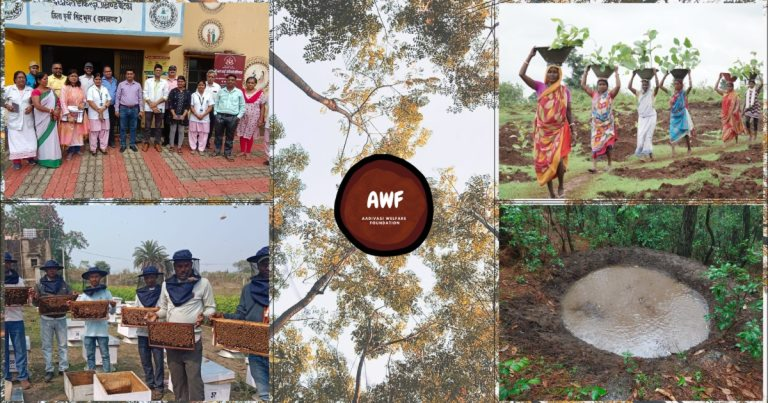
At the Aadivasi Welfare Foundation (AWF), we believe this is more than a policy moment. It is a turning point that can empower millions of tribal families, strengthen ecosystems, and build resilience against climate change. And it is exactly where AWF’s six pillars—Jungle (Forest), Jal (Water), Jameen (Land), Jalvayu (Climate), Jaanwar (Wildlife), Janjaati (Tribes)—intersect with today’s headlines. Water is life, especially in tribal regions where agriculture, health, and livelihoods depend on local water bodies. Yet, decades of neglect have left many ponds, wells, and small dams silted, broken, or dry. At AWF, our work in rejuvenating ponds, Chal-Khal water bodies, and natural catchments is already showing results: higher groundwater levels, reliable irrigation, and even new livelihood opportunities like fish farming and beekeeping. Policies like the one proposed in Himachal validate the approach we’ve been taking for years. The Forest Rights Act, 2006 was designed to empower tribal communities with legal rights over their ancestral forests. But the Act has once again come under debate, with some claiming that community rights may degrade forests. The Ministry of Tribal Affairs has rightly pushed back, pointing to evidence that when tribal communities have secure rights, forests thrive. AWF’s experience proves this: This is not a conflict between people and forests; it is an opportunity to reimagine conservation as community-led. Another encouraging trend is the growing recognition of tribal entrepreneurship. Gujarat’s new agri-business policy, for example, provides incentives for women and tribal entrepreneurs. Similarly, the government’s Van Dhan Vikas Kendras are scaling up value addition in forest produce like lac, tamarind, and honey. At AWF, we are already doing this on the ground: While policies and debates grab headlines, AWF ensures action happens where it matters most: the villages. These are not abstract issues. They affect climate change adaptation, food security, and India’s SDG goals. As water policies are rewritten, as forest rights are debated, and as tribal entrepreneurship is promoted, one question remains: who will ensure these changes benefit those who need them most? AWF stands ready. We are already working in tribal states where these issues are most urgent. With your support—whether as a donor, CSR partner, volunteer, or advocate—we can scale up water conservation, protect forests, and empower communities. 2025 is not just another year. It is a turning point in how India views its forests, water, climate, and indigenous people. By aligning national policies with grassroots action, we can build a future that is climate-resilient, socially just, and environmentally sustainable. At AWF, we call this vision “Restoring Life.” Together, let’s make it a reality.